Building Your Authority Brand Without the Personal Visibility Burnout: A Playbook

ki🫶🏾✨

The Authority Brand Problem Nobody Wants to Admit
You run a seven-figure business. You make strategic decisions that move markets. You mentor other founders. You've solved problems most people in your space don't even know exist yet. And yet, when someone searches for you online or lands on your website, they see someone who looks like they're still figuring it out.
The gap between your actual operating level and how you appear online isn't small. It's costing you deals. It's costing you premium positioning. It's costing you the clients and opportunities that naturally gravitate toward founders who look like they already belong at that table.
Here's what makes this worse: every solution you've seen so far feels like it requires you to become a content machine. Post daily. Film reels. Build a newsletter. Show up constantly. The idea of adding "personal brand visibility" to your plate makes you want to close the laptop and go back to what you're actually good at, which is running your business.
That burnout feeling is real. And it's the reason most high-performing founders stay invisible for far longer than they should.
The problem isn't that you need to be more visible. The problem is that visibility without strategy becomes performance, and performance is exhausting. What you actually need is an authority brand playbook, one that works with your natural operating style instead of against it.
Understanding the Authority Brand Gap
An authority brand gap exists when your online positioning lags behind your actual capability and results. You've already proven what you can do. You have the revenue, the case studies, the client wins, the strategic depth. But your brand still communicates "emerging" when you're actually "established."
This gap shows up in specific ways:
- Your website copy sounds uncertain or overly general, when your actual work is highly specific and strategic.
- Your visual identity feels approachable and startup-y, when you operate at a CEO level.
- Your positioning targets "anyone who wants to improve," when you actually work with founders at a particular revenue stage with particular problems.
- Your messaging focuses on the problem you solve, when it should focus on the founder you make possible.
- Your social presence is inconsistent or absent, so people assume you're not actively building or leading.
The real cost of this gap isn't just missed opportunities. It's the constant friction of code-switching between who you are and how you appear. That mental tax is real. It drains energy. It creates self-doubt. It makes you question whether you should even be putting yourself out there at all.
The founders who close this gap don't do it by becoming more visible. They do it by becoming more intentional.
Play 1: Define Your Authority Identity, Not Your Personal Brand
Most founders approach personal branding from the wrong angle. They think about what they should share, what's interesting, what might resonate. That leads to generic, unfocused positioning that doesn't match their actual authority.
Start differently. Define your authority identity by answering three specific questions:
What level of founder are you actually working with? Not who you want to serve someday. Who are you serving right now, consistently, at premium pricing? Are you working with founders doing 100K in annual revenue, or founders scaling past 7 figures? Are you working with first-time entrepreneurs or serial founders? The specificity matters. Your authority identity should reflect the actual tier you operate at.
What specific problem do you solve that only founders at your level face? A founder doing 100K has different problems than a founder doing 1M. A founder building a personal brand has different needs than a founder trying to hire their first team. Your authority identity should be rooted in a problem that's specific enough that not everyone needs your help, but clear enough that the right people immediately recognize themselves in it.
What's the transformation you make possible? Not the service you provide. The version of the founder they become. If you work with founders on brand clarity, the transformation isn't "a clearer brand." It's "a founder who shows up online as the authority level they already operate at" or "a founder who stops code-switching between how they appear and how they lead." The transformation should be about who they become, not what they get.
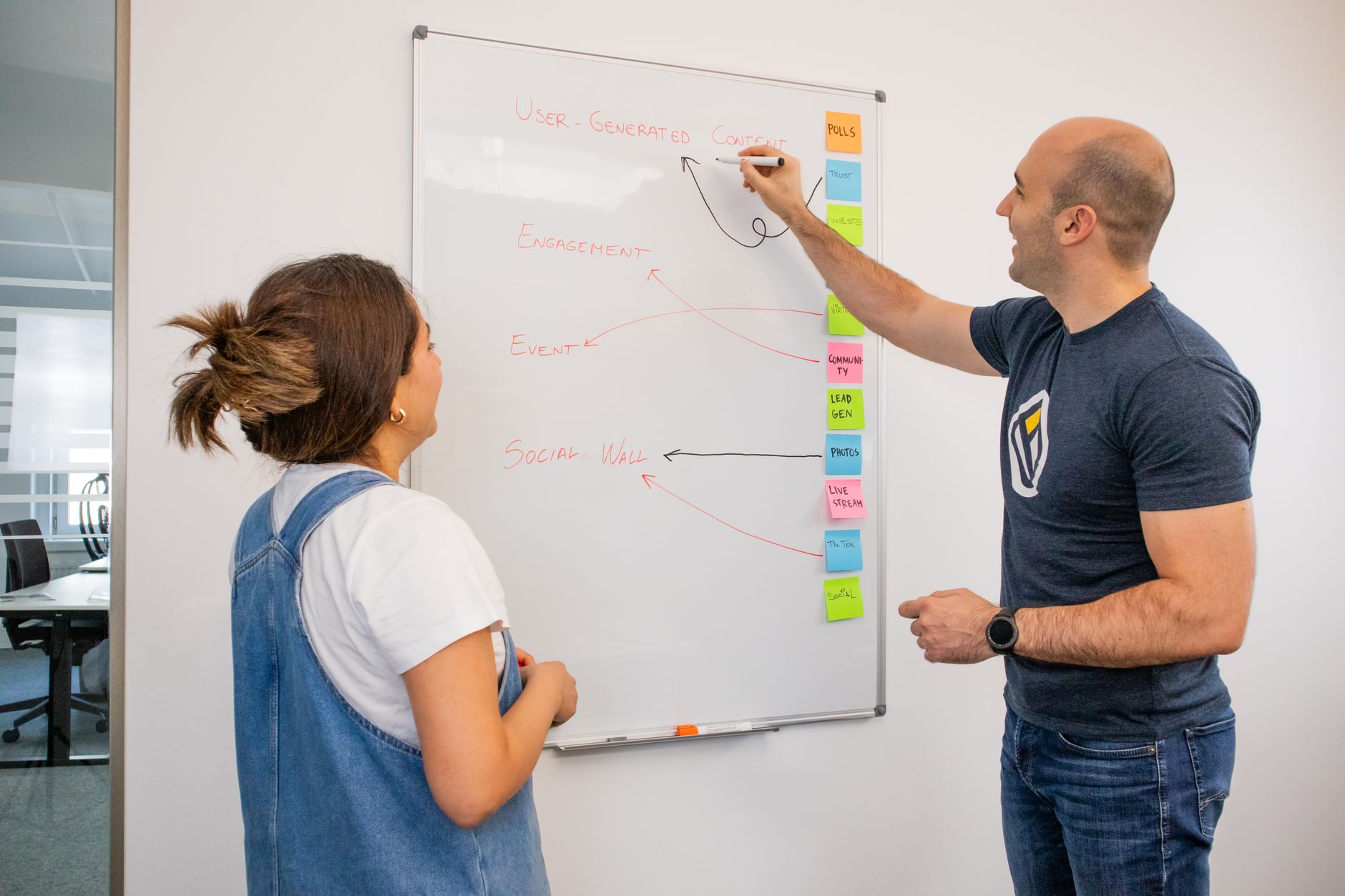
Write these three things down. These become the foundation of your authority brand. Everything else flows from here.
Play 2: Audit Your Visual Identity Against Your Operating Level
Your visual identity is communicating something right now. The question is whether it's communicating authority at your actual level, or authority at a level you've already outgrown.
This doesn't mean you need a rebrand. It means you need an audit. Look at your website, your social profiles, your email signature, any place your brand shows up visually. Ask yourself: if someone who didn't know me saw this, what level of founder would they assume I am?
Common visual misalignments for established founders:
If this resonates, you will get a lot from the rest of our coaching library as well.
- Bright, playful color palettes that read "startup energy" when you operate with strategic depth.
- Casual photography or selfies when your actual client base expects polish and intentionality.
- Inconsistent or outdated photos across platforms, suggesting you're not actively building or leading.
- Typography and layout that feels DIY, when your actual work is premium and strategic.
- Messaging that's too broad or motivational, when your actual positioning is specific and results-focused.
You don't need to overhaul everything. But you need to make sure your visuals are aligned with the authority level you actually operate at. If you're running a seven-figure business but your brand looks like you're in year one, that's a friction point that costs you credibility every single day.
Play 3: Map Your Authority Narrative in Three Layers
Your authority brand needs a narrative, but not the kind you've been taught. Not a personal story about your struggles. An authority narrative that shows how you think and operate at the level you're actually at.
Layer one is your point of view. What do you believe about your space that most people get wrong? What's one thing you've learned from running your business at scale that would change how emerging founders approach their work? Your point of view should be specific enough that it has a point, but universal enough that it applies across your audience. It's not about you. It's about how you see the world.
Layer two is your evidence. What have you actually built or achieved that proves your point of view works? This is where your revenue, your case studies, your client results, and your track record live. Not as bragging. As proof. As the reason someone should listen to what you think.
Layer three is your method. How do you actually help someone apply your point of view to their own situation? What's the process, framework, or approach you use? This is where you become specifically useful instead of generally inspiring.
These three layers should show up consistently across how you communicate. In your website copy. In your social content. In conversations with potential clients. They create a coherent authority narrative that people can trust because it's rooted in actual thinking, actual results, and actual methodology.
Play 4: Choose Your Primary Visibility Channel, Not All of Them
This is where most founders get derailed. They think building an authority brand means showing up everywhere. LinkedIn, Instagram, TikTok, Twitter, a podcast, a newsletter. The thought of managing all of that is what makes visibility feel like burnout.
You don't need all of them. You need one primary channel where you can show up consistently without it feeling like performance.
For more on this, it is worth reading Building a Sustainable Personal Brand Without Burnout: A Playbook.
For most established founders, that channel is one of three:
LinkedIn. If your audience is other founders, executives, or business leaders, LinkedIn is where they're already looking for authority. It's the one platform where showing up strategically positions you as a serious operator, not a content creator. You can write longer form. You can share your actual thinking. You can post less frequently and still build authority.
A newsletter. If you have insights worth sharing on a regular basis, a newsletter is the most direct line to your audience. You own the relationship. You control the narrative. You're not competing with algorithms. You can go weeks without posting and nobody notices. But when you do share, it goes directly to people who chose to hear from you.
Your website. If you're a founder who prefers depth over frequency, your website is your primary channel. A regularly updated blog, a resources section, a clear articulation of your methodology. People find you when they're looking for your specific expertise. You're not chasing visibility. You're making yourself available to people actively seeking what you have.
Pick one. Commit to it for three months. Let it become natural. Then, if you want to expand, expand from a place of strength instead of from a place of "I should probably be on more platforms."
Play 5: Build Your Content Around Your Actual Operating Insights
The reason most founder content feels like performance is that it's built around what you think people want to hear, not what you actually know.
Reverse that. Your content should come from your actual operating insights. What do you see working in your business that most people aren't talking about? What patterns do you notice across your clients? What problems do you solve that are more nuanced than the obvious version?
These insights are your authority content. They're specific. They're rooted in real experience. They're useful because they come from someone who's already solved the problem at scale.
If this resonates, you will get a lot from Building Your Leadership Brand Without the Personal Performance Trap: A Playbook as well.
This is different from generic advice. Generic advice sounds like everyone else. Operating insights sound like you.
When you build content around your actual insights, you don't need to post constantly. A few pieces a month that are genuinely useful will build more authority than daily posts about general motivation.
Play 6: Position Authority, Not Availability
Most founder visibility strategies focus on being accessible and responsive. That's the opposite of authority positioning.
Authority positioning means being selective. It means having a clear point of view about who you work with and what problems you solve. It means saying no to things that don't align. It means pricing at a level that reflects your actual value, not competing on affordability.
When you position yourself as available to anyone who needs help, you position yourself as a service provider. When you position yourself as selective about who you work with and what you work on, you position yourself as an authority.
This shows up in how you talk about your work. Not "I help founders build their brands" but "I work with established founders who are ready to show up online as the authority level they already operate at." Not "I'm here to help with whatever you need" but "If you're building a seven-figure business and your brand positioning hasn't caught up yet, let's talk."
Selectivity builds authority. Availability builds exhaustion.

What Results to Expect
When you build your authority brand strategically instead of through constant visibility, the results show up differently than you might expect.
You won't see a sudden spike in followers or engagement. That's not the goal. The goal is that the right people find you and immediately recognize that you operate at the level they want to reach.
What you will see: fewer but higher-quality inbound inquiries. People who already know your positioning and are ready to work with you at your premium pricing. Conversations that start with "I've been following your thinking on this" instead of "Can you help me?" Opportunities that come to you instead of you chasing them.
You'll also notice a shift internally. The friction of code-switching decreases. You're not performing anymore. You're showing up as the actual version of yourself that people already know you are in private. That alignment is where the real confidence comes from.
Timeline-wise, this takes time. Real authority positioning isn't built in weeks. But it's also not a years-long project. Most founders see meaningful shifts in three to six months of consistent, strategic visibility. The key is that it's consistent and strategic, not constant and exhausting.
The Authority Brand Checklist
| Component | Status | Action |
|---|---|---|
| Authority identity defined (level of founder + specific problem + transformation) | Not started / In progress / Complete | Write these three things down this week |
| Visual identity audit completed | Not started / In progress / Complete | Screenshot your website and social. Does it match your actual operating level? |
| Authority narrative mapped (point of view + evidence + method) | Not started / In progress / Complete | Draft each layer in a document. Use these in all future communication |
| Primary visibility channel selected | Not started / In progress / Complete | Choose one. Commit to three months of consistent presence |
| Operating insights documented | Not started / In progress / Complete | List five insights from your actual business that aren't common knowledge |
| Positioning statement refined (selective, not available) | Not started / In progress / Complete | Rewrite your positioning to reflect who you actually work with |
The Real Work Starts With Identity
Building an authority brand that doesn't burn you out starts with one thing: getting crystal clear on who you actually are as a founder and what level you actually operate at.
Your authority brand isn't about becoming someone different. It's about showing up online as the someone you already are in the room where it matters most.
Most founders skip this step. They jump straight to "what should I post" or "which platform should I use." That's why they end up exhausted. They're building visibility without foundation.
This playbook works because it starts with identity, not tactics. Once you know who you are and what you stand for, the rest becomes obvious. The visual identity that matches you. The content that comes from your actual thinking. The positioning that attracts the right people.
If you're a founder with real revenue and real results but your brand positioning still doesn't reflect that, this is your path forward. Not through constant visibility. Through strategic clarity.
The Brand Clarity Intensive is built exactly for this. Six weeks to define your identity, align your visuals, and activate your authority in a way that matches the level you actually operate at. You work through each of these plays with accountability and community. You get support defining your authority identity. You get real feedback on whether your visual positioning is aligned. You get your actual operating insights articulated and positioned.
The goal is that at the end of six weeks, your mindset finally matches the level you're trying to move at. No more guessing what to post. No more wondering how to show up. No more friction between who you are and how you appear.
That alignment is where authority actually lives.


